Is a treatment in Korea really cheaper once you add everything up?
Picture the spreadsheet most people build at some point. A quote from a clinic at home sits in one column, a number from a Seoul clinic's chat window sits in the next, and a flight search is open in another tab. The Korean figure is smaller, and the question writes itself: is this really cheaper, or does it only look that way?
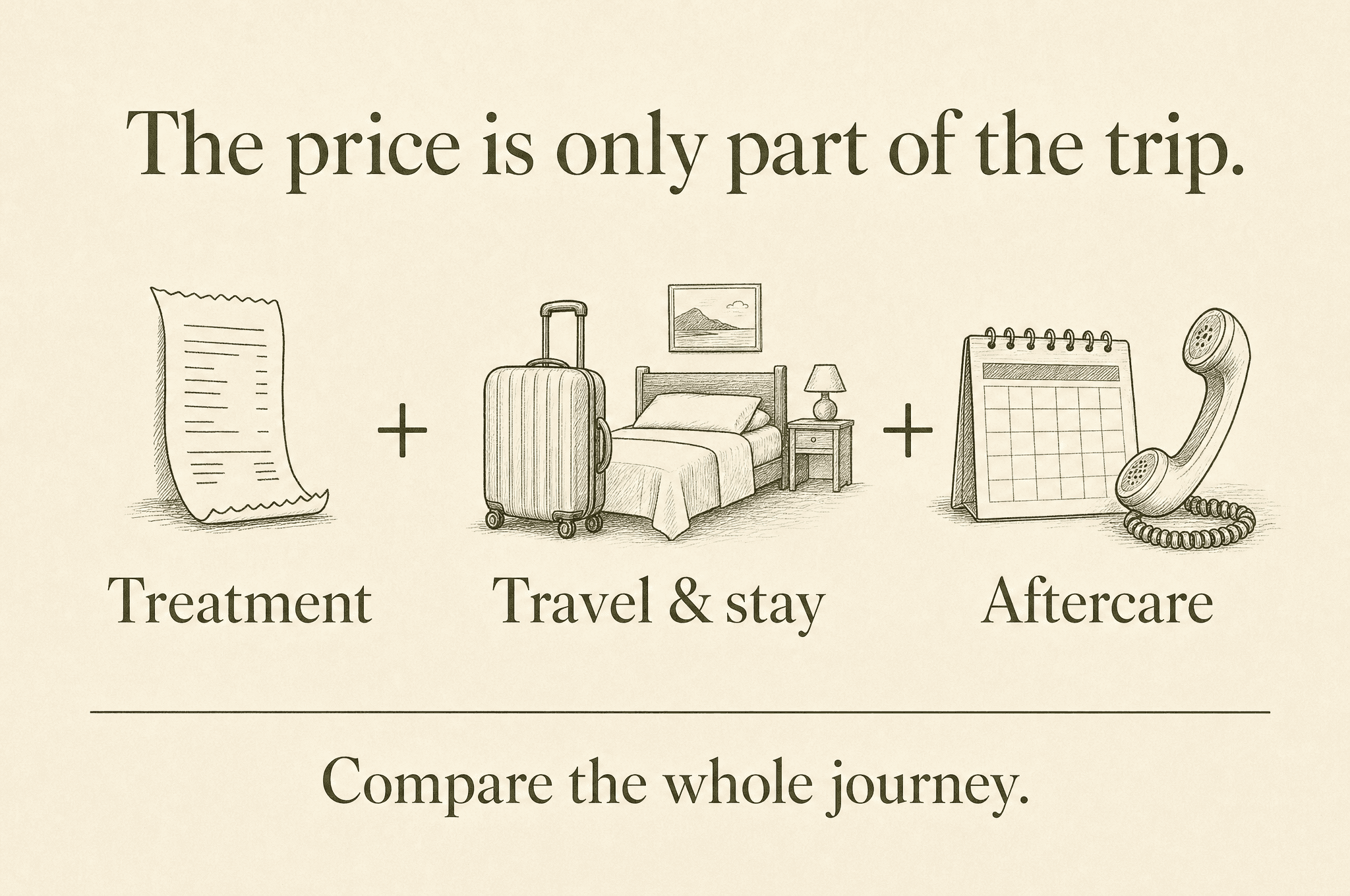
The lower quote in front of you is a real number, but it is only one number. A procedure abroad is paid for in pieces, and the treatment fee is the piece that is easiest to see. The honest comparison is the total, from the day you book a flight to the day any follow-up at home is finished. Depending on what goes into it, the total can come out lower, about the same, or higher than staying home.
What goes into the total
Start with what you would pay at home anyway, then list only what the trip adds. Flights and a hotel are obvious. Less obvious are the extra nights if the clinic wants to see you again before you fly, taxis between hotel and clinic, an interpreter if the clinic does not provide one, and the days off work, which cost money even though nobody sends an invoice for them.
Then look past the flight home. The CDC's chapter on medical tourism notes that care abroad is usually paid out of pocket, that some providers charge substantial fees for follow-up care on top of the base price, and that complications or revisions can add to the original cost. Ordinary travel insurance does not normally cover problems that arise from a procedure, as the NHS points out in its advice on surgery abroad. If you want that kind of cover, you have to look for it specifically and read what it leaves out.[1][2]
A worked example with invented numbers
The numbers below are made up to show the arithmetic. They are not real prices for any treatment, clinic or city.
Say a treatment is quoted at 1,000 at home and 600 in Seoul, in the same currency. The gap looks like 400. Add a return flight of 300 and three extra hotel nights at 60 each, which is 180, and the Seoul side is now 1,080, a little more than staying home. Now change one assumption: you were going to Korea for a holiday anyway, so the flight and hotel were already in the budget. The comparison goes back to 600 against 1,000. Change another: the clinic would like to check you a week later and you cannot stay, so you pay a doctor at home 150 to look at the result. The gap narrows again.
No single answer falls out of this. The decision moves depending on whether the trip exists for the treatment, or the treatment fits into a trip you were taking anyway.

Making the two quotes comparable
Ask the Korean clinic to write out what the price includes: the product or device and how much of it, numbing, aftercare products, and whether a review visit or touch-up is included or charged separately. The NHS suggests asking whether further treatment, if it turns out to be needed, will cost extra. Ask the clinic at home the same questions, so you are comparing like with like.
Last, decide before you go what you would do if something needed attention after you got home: who you would see, and roughly what that visit would cost. It is a dull line in the spreadsheet, and an easy one to leave blank.[3][1]