Cosmetic consultations
Can Ultrasound or RF Tightening Cause Facial Fat Loss?
 Dr. Kwang Yeon KimRepresentative Director, Tune Clinic Apgujeong12 min read · Sources included
Reviewed by Dr. Jee Hoon Ju
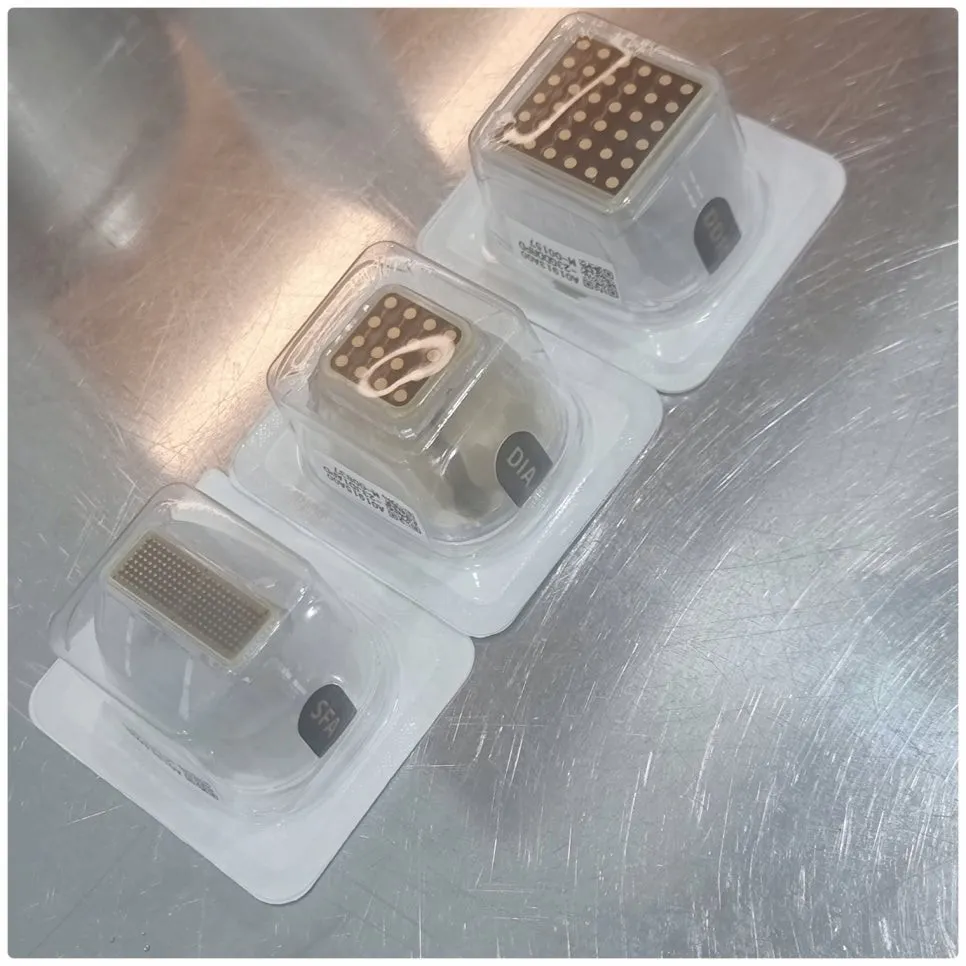
Can Ultrasound or RF Tightening Cause Facial Fat Loss?
Yes, unwanted facial fat loss has been reported after both ultrasound and RF tightening. No reliable rate is established, so ask about the exact device and applicator.
Yes, unwanted facial fat or volume loss has been reported after both focused ultrasound and radiofrequency (RF) tightening, and the available evidence does not establish a reliable population rate. A 2025 safety review of microfocused ultrasound covered 19 articles and 506 patients, which is too small a base to estimate how often it happens (2025 MFU-V review (https://pubmed.ncbi.nlm.nih.gov/39625163/)). If keeping cheek volume is your priority, confirm the exact device, applicator, intended tissue effect and areas to avoid before treatment, and defer if those cannot be explained.
A visitor preparing for a Seoul consultation has saved two clinic menus on her phone. One says ultrasound lifts and RF preserves volume. The other lists surface RF and RF microneedling under one heading. She wants a firmer jawline and does not want slimmer cheeks. This is a composite illustration, not a real patient account. In my 2022 post I called ultrasound versus RF one of the topics many readers find confusing.1
Can ultrasound or RF tightening make my cheeks look hollow?
Yes, it has been reported with both, and the evidence does not show how likely it is for you. The Ulthera instructions for use list fat or volume loss among events reported after the device went on the market (Ulthera IFU (https://ultherapy.com/app/themes/ultherapy2020/pdfs/1015107IFU-Rev-05-US-Ultherapy.pdf)). The Thermage FLX user manual describes surface irregularities, including contour changes described as fat loss (Thermage FLX manual (https://appdb.tisi.go.th/TISINSW/File/order/0105541023016-P-20231120100302-1.pdf)).
In 2022 I wrote that cheek hollowing is possible with ultrasound and almost absent with RF, and that treatment design matters relatively less for RF. The labeling does not support the RF half of that comparison. The Thermage manual already listed contour irregularities, and RF treatment also depends on anatomy, tip choice and settings.
A reported event shows that something is possible. Voluntary reports cannot establish frequency or cause, a limit the Ulthera labeling itself notes. Online you will find both flat denials and claims that every energy device melts fat. The labeling supports neither.23
What does ultrasound or RF mean on a clinic menu?
They are energy sources. Neither word names a single treatment or a single safety profile. Focused ultrasound places small points of heat coagulation at set depths under the skin (2023 systematic review (https://pmc.ncbi.nlm.nih.gov/articles/PMC9861614/)). RF is electrical energy that heats tissue, and where the heat goes depends on the electrode, the applicator and the protocol (FDA (https://www.fda.gov/medical-devices/aesthetic-cosmetic-devices/non-invasive-body-contouring-technologies)). A 2023 post on the clinic blog described RF as a laser procedure. That was inaccurate: laser is light.
Focused ultrasound (Ulthera, Ultraformer family). How energy reaches tissue: Focused heat points at set depths. Usual stated aim: Tightening and lifting. What to ask if you want to keep volume: Which depths are used and which areas are skipped.
Surface RF (Thermage FLX, Oligio). How energy reaches tissue: Heating through the skin surface, no needles. Usual stated aim: Firmness through collagen remodeling. What to ask if you want to keep volume: Which tip is used and how thin areas are handled.
RF microneedling (Potenza needle tips). How energy reaches tissue: RF delivered through needles in the skin. Usual stated aim: Varies by tip. What to ask if you want to keep volume: Needle depth and who performs it.
RF fat-contouring applicators (certain InMode applicators). How energy reaches tissue: RF-based heating aimed at fat. Usual stated aim: Reducing a fat bulge. What to ask if you want to keep volume: Whether fat reduction is intended at all.
A platform name is not enough.
Ask which applicator will touch your face.
For readers from Japan: a June 2024 notice from Japan's health ministry classifies HIFU that can cause thermal coagulation as a medical act and discusses injury reports (MHLW (https://www.mhlw.go.jp/web/t_doc?dataId=00tc8569&dataType=1)). In Japan, this rule applies regardless of whether the device is described as medical. Qualifying HIFU procedures must be performed by a physician in a medical care facility.
Potenza has both invasive needle tips and noninvasive tips (Jeisys (https://jeisys.com.au/potenza/)).
Accent Prime, the platform behind Tune Face, combines RF and ultrasound applicators (Alma (https://lp.almalasers.com/WF-SM-Product-Info_LP-Accent-Prime.html)).
InMode is a manufacturer with many applicators, and some are designed to treat fat with RF-based technology (InMode (https://inmodeuniversity.com/technology/bodyfx-minifx/)).
Ultrasound platforms also come with several applicators (Classys (https://classys.com/product/ultraformer-mpt/)).
Is tightening skin the same as reducing facial fat?
No. Tightening, lifting and fat reduction are separate treatment goals. The FDA describes fat reduction as its own kind of device use, with authorization tied to specific body sites (FDA (https://www.fda.gov/medical-devices/aesthetic-cosmetic-devices/non-invasive-body-contouring-technologies)). Tightening rests on a different idea: controlled heating followed by collagen remodeling, which may improve firmness and does not restore volume that is already lost (2024 monopolar RF study (https://www.mdpi.com/2079-9284/11/3/71)).
In my 2022 comparison I wrote that ultrasound makes the face smaller by pushing it inward, and that RF induces collagen regeneration so the face improves naturally. The first half is a misleading shortcut, because a smaller face is not a built-in result of focused ultrasound. The 2023 post said old collagen regenerates into young cells. Collagen is a protein outside the cells, so the accurate description is heating followed by remodeling.
If an applicator is intended to reduce a fat bulge, that should be a stated aim you agreed to before treatment.911
Is RF automatically safer for a thin or hollow face?
No, there is no category-wide answer. Surface RF labeling acknowledges contour irregularities, and ultrasound labeling acknowledges reports of volume loss. Neither set of reports shows which is safer.
In 2022 I advised readers who do not want to lose fat to switch boldly to another treatment. Switching from one energy label to the other does not remove the concern, because neither is a uniform fat-loss category.
What helps is an examination: where your face is already thin, which areas should be skipped, and which tip and settings fit the tissue. The Thermage manufacturer describes different tips for different areas and an assessment before treatment (Thermage (https://www.thermage.com/)). I also advised asking the doctor to avoid the areas you yourself consider hollow, and describing the effect you want in detail because RF devices differ from each other. Both requests remain reasonable. They inform the plan and do not replace the examination.12
Did the FDA ban RF microneedling in 2025?
No. On October 15, 2025 the FDA issued a safety communication about potential risks with certain uses of RF microneedling, after reports of serious complications (FDA (https://www.fda.gov/medical-devices/safety-communications/potential-risks-certain-uses-radiofrequency-rf-microneedling-fda-safety-communication)). It is a warning. It does not ban the procedure, and it does not cover every RF treatment. Surface RF without needles is a different delivery method.
The American Academy of Dermatology responded by stressing knowledge of anatomy and appropriate medical expertise (AAD (https://www.aad.org/news/statement-on-fda-rf-microneedling-risks)). The practical step is to find out whether needles are part of your plan, since one platform can be used both ways.1314
How strong is the evidence, and can anyone quote my risk?
The evidence supports possible benefit in selected patients, and it does not supply a risk figure that applies to an individual.
A study can report how often an event occurred among its own participants. That is different from a rate for the wider population or for your face. Studies of this size are too small to measure rare events, and spontaneous reports have no denominator. A precise personal percentage for facial fat loss goes beyond this evidence.
Separately, these devices are studied for skin laxity. They should not be expected to correct major tissue descent or volume loss.
A 2023 systematic review of microfocused ultrasound found varied protocols, devices and outcome measures (2023 systematic review (https://pmc.ncbi.nlm.nih.gov/articles/PMC9861614/)).
A 2025 systematic review of RF facial treatments included 15 studies and 1,230 participants. It had substantial methodological limits and poor reporting of downtime, and its lead author has a manufacturer affiliation (2025 RF review (https://pmc.ncbi.nlm.nih.gov/articles/PMC12715571/)).
On safety, the 2025 ultrasound review drew on 19 articles with 506 patients and 106 reports from the FDA's MAUDE database (2025 MFU-V review (https://pubmed.ncbi.nlm.nih.gov/39625163/)).
Do more shots, more pain or a newer generation mean a better result?
No, none of these is a reliable quality measure. In 2022 I wrote that wanting an immediate effect can raise the RF shot count. No general dose-response rule supports that advice, and shot count alone does not tell you the thermal dose, the tip size or the area covered.
Pain is not a validated meter of effect either. A 2024 study of a monopolar RF device in 20 women reported a mean pain score of 0.4, indicating very low pain in this small cohort. A study that small cannot establish comfort or safety for everyone (2024 monopolar RF study (https://www.mdpi.com/2079-9284/11/3/71)).
Generation labels are not a regulatory or clinical ranking. The 2023 post called 10THERMA a fifth-generation treatment with the highest satisfaction. The post supplied no audit, comparator, questionnaire or patient count to support that ranking. 10THERMA, a monopolar RF device, received US FDA clearance on December 20, 2023 for electrocoagulation and hemostasis, and the summary states that clinical studies were not required or performed for that submission (FDA K232992 (https://www.accessdata.fda.gov/cdrh_docs/pdf23/K232992.pdf)).
Indications are device-specific. Thermage FLX is cleared in the US with wrinkle and rhytid indications (FDA K170758 (https://www.accessdata.fda.gov/cdrh_docs/pdf17/K170758.pdf)). Ulthera's cleared uses name particular sites such as the eyebrow, neck, under the chin and décolleté (Merz (https://ultherapy.com/ifu)). Korean status also differs by model, so ask for the exact model name and its Korean authorization.16171118
When should I judge whether treatment worked?
Later than the first days, and on a date agreed with your doctor. My 2022 table put skin improvement from collagen resynthesis at about two to four weeks for both energy types. That window is not supported as a universal timetable. The 2024 monopolar RF study assessed results at 4, 12 and 24 weeks (2024 monopolar RF study (https://www.mdpi.com/2079-9284/11/3/71)), and the ultrasound studies in the 2023 review also used later follow-up (2023 systematic review (https://pmc.ncbi.nlm.nih.gov/articles/PMC9861614/)).
An early change, including swelling, cannot establish the final result. Ask when the clinic will review the outcome for your specific device.411
How long do swelling and soreness last, and which symptoms need a doctor?
It depends on the device. In 2022 I listed swelling of one to four weeks and pain of one to two weeks for ultrasound, and about a week of redness for RF. Device labeling is more specific.
I suggested lowering ultrasound intensity to limit swelling when an important appointment falls within a week. No validated event-ready protocol was identified, and postponing may be the better choice.
Seek emergency care immediately for sudden facial weakness, sudden vision loss or double vision, or speech or limb weakness. Do not wait for a clinic reply (NHS (https://www.nhs.uk/conditions/transient-ischaemic-attack-tia/symptoms/)). Contact a clinician promptly for worsening pain, burns or blisters, and arrange an examination for a contour change that persists. If you have already flown home, see a local physician in person as well as contacting the treating clinic.
Ulthera: mild facial swelling that typically resolves within 3 to 72 hours, short-lived discomfort, and tenderness that can last up to two weeks (Ulthera IFU (https://ultherapy.com/app/themes/ultherapy2020/pdfs/1015107IFU-Rev-05-US-Ultherapy.pdf)).
Thermage: redness that usually resolves within hours, with swelling and other adverse effects also listed (Thermage FLX manual (https://appdb.tisi.go.th/TISINSW/File/order/0105541023016-P-20231120100302-1.pdf)).
RF microneedling: it uses needles and cannot share a surface RF estimate.
Could ultrasound or RF make a future facelift harder?
For microfocused ultrasound with visualization, the 2025 review found insufficient published evidence to establish that treatment compromises a later facelift (2025 MFU-V review (https://pubmed.ncbi.nlm.nih.gov/39625163/)). That is not proof of no risk, and the review does not answer the question for RF procedures. Social media claims that energy treatments make surgery impossible go further than the data.
If you may want surgery later, tell your surgeon every energy treatment you have had, with device names and dates.1
Should I combine ultrasound and RF in one Korea visit?
Only if each treatment has its own reason. In 2022 I wrote that several treatments often need to be combined, and that a full consultation should come first. Complementary mechanisms alone do not show added benefit, and the reviews do not establish that combination is routinely needed (2025 RF review (https://pmc.ncbi.nlm.nih.gov/articles/PMC12715571/)). The consultation is the part of that advice the evidence supports.
I listed skin boosters, IV infusions and LDM as companions to both treatments, to help regeneration. The sources reviewed here do not establish a recovery benefit for that package, and a biochemical rationale for IV amino acids is not a clinical result.15
What should I ask before booking treatment in Korea?
Ask about the device, the aim, your own medical history and the follow-up. Contraindications and precautions differ by device. The Ulthera instructions list wounds in the treatment area, severe or cystic acne and specified implants as contraindications, and the Thermage manual contraindicates implanted electrical devices. Other conditions appear only as precautions or as unstudied groups, which calls for an individual discussion.
The decision about your face is yours. The physician who recommends a plan is responsible for examining you first, explaining what is known and what is uncertain, and staying reachable after treatment.
Tune Clinic Apgujeong today: the lobby, waiting areas and treatment rooms where consultations and treatments take place.
Related: Oligio vs Ultherapy vs Thermage: Which Lifting Device Fits Your Face, Ultherapy in Korea: What International Patients Should Know Before Booking, Planning Aesthetic Treatment Before a Flight
Which exact device, model and applicator or tip will be used on my face?
Does this applicator use needles, and who will perform the treatment?
Is the aim tightening, fat reduction or both, and in which areas?
Which areas of my face will you avoid, and why?
Which parts of my medical history, medicines, implants, previous fillers or procedures, pregnancy status and current skin problems affect suitability for this exact device?
What is this device authorized for in Korea, and is my treatment within that use?
What is the separate reason for each additional treatment in the plan?
When will the result be reviewed, and how do I reach you after I fly home?
About the author
Written by Dr. Kim Kwang-yeon, a physician at Tune Clinic Seoul, and medically reviewed by Dr. Jee Hoon Ju, so you can make an informed choice, with both physicians standing behind the advice. The aim is to give you the whole picture, including what is uncertain and what can go wrong, before you decide. Take your questions with you to your consultation; the answers should describe the clinic's own plan for you. The original, with sources, is at tuneclinic-global.com (https://tuneclinic-global.com/guides/ultrasound-rf-tightening-facial-fat-loss-risk).
Tune Clinic Seoul, 4F, Apgujeong Securities Building, 14 Nonhyeon-ro 176-gil, Gangnam-gu, Seoul 06026, Republic of Korea. Mon-Thu 11:00-20:00 / Fri 11:00-21:00 / Sat 10:00-16:00 / Sun closed (KST).
Sources & further reading
- Microfocused Ultrasound With Visualization, A Systematic Review of Adverse Events and Risk of Subsequent Facelift Compromise. Dermatologic Surgery 2025Microfocused Ultrasound With Visualization, A Systematic Review of Adverse Events and Risk of Subsequent Facelift Compromise. Dermatologic Surgery 2025
- Ulthera / Merz. Ulthera System Instructions for Use, revision 05Ulthera / Merz. Ulthera System Instructions for Use, revision 05
- Solta Medical. Thermage FLX System User Manual. 2018Solta Medical. Thermage FLX System User Manual. 2018
- A Systematic Review of the Efficacy of Microfocused Ultrasound for Facial Skin Tightening. International Journal of Environmental Research and Public Health 2023A Systematic Review of the Efficacy of Microfocused Ultrasound for Facial Skin Tightening. International Journal of Environmental Research and Public Health 2023
- Jeisys Medical. POTENZA RF Microneedling DeviceJeisys Medical. POTENZA RF Microneedling Device
- Alma. Accent Prime Multiplatform TechnologyAlma. Accent Prime Multiplatform Technology
- InMode University. MiniFX and BodyFXInMode University. MiniFX and BodyFX
- Japan Ministry of Health, Labour and Welfare. HIFU procedures performed by persons without a medical license. Notice 2024Japan Ministry of Health, Labour and Welfare. HIFU procedures performed by persons without a medical license. Notice 2024
- FDA. Non-Invasive Body Contouring TechnologiesFDA. Non-Invasive Body Contouring Technologies
- CLASSYS. ULTRAFORMER MPT product pageCLASSYS. ULTRAFORMER MPT product page
- Efficacy and Safety of Monopolar Radiofrequency for Tightening the Skin of Aged Faces. Cosmetics 2024Efficacy and Safety of Monopolar Radiofrequency for Tightening the Skin of Aged Faces. Cosmetics 2024
- Solta Medical. Thermage Skin Tightening Treatment and Safety InformationSolta Medical. Thermage Skin Tightening Treatment and Safety Information
- FDA. Potential Risks with Certain Uses of Radiofrequency Microneedling. Safety Communication 2025FDA. Potential Risks with Certain Uses of Radiofrequency Microneedling. Safety Communication 2025
- American Academy of Dermatology. Statement on the FDA Safety Briefing about Radiofrequency Microneedling Risks. 2025American Academy of Dermatology. Statement on the FDA Safety Briefing about Radiofrequency Microneedling Risks. 2025
- Radiofrequency-Based Treatments for Facial Rejuvenation, A Systematic Review. Aesthetic Surgery Journal Open Forum 2025Radiofrequency-Based Treatments for Facial Rejuvenation, A Systematic Review. Aesthetic Surgery Journal Open Forum 2025
- FDA. Thermage FLX System, K170758. 510(k) clearance 2017FDA. Thermage FLX System, K170758. 510(k) clearance 2017
- FDA. 10THERMA, K232992. 510(k) clearance and summary 2023FDA. 10THERMA, K232992. 510(k) clearance and summary 2023
- Merz Aesthetics. Ultherapy Instructions for Use resource page. 2026Merz Aesthetics. Ultherapy Instructions for Use resource page. 2026
- NHS. Transient ischaemic attack (TIA), SymptomsNHS. Transient ischaemic attack (TIA), Symptoms
Still unsure?
Ask this question in the community.
Other travelers and the DockieTalkie team read the board. Post your situation and link this guide.
Ask this questionMake room for understanding
Your questions. In your language.
Prepare for clinic and pharmacy conversations with DockieTalkie. Korean plus 10 other languages, with medical terminology built in.
Create your DockieTalkie accountThis guide stays free to read. An account gives you access to the app.About the author
Dr. Kwang Yeon Kim
Representative Director, Tune Clinic Apgujeong
Focuses on full-face design and body contouring.
Author profile