Hair falling out after a hair transplant: what is expected, and when should it be checked?
Four weeks after surgery, there are hairs on the pillow every morning, and the mirror seems to show less hair than before the operation. It is natural to wonder whether the transplant has failed.
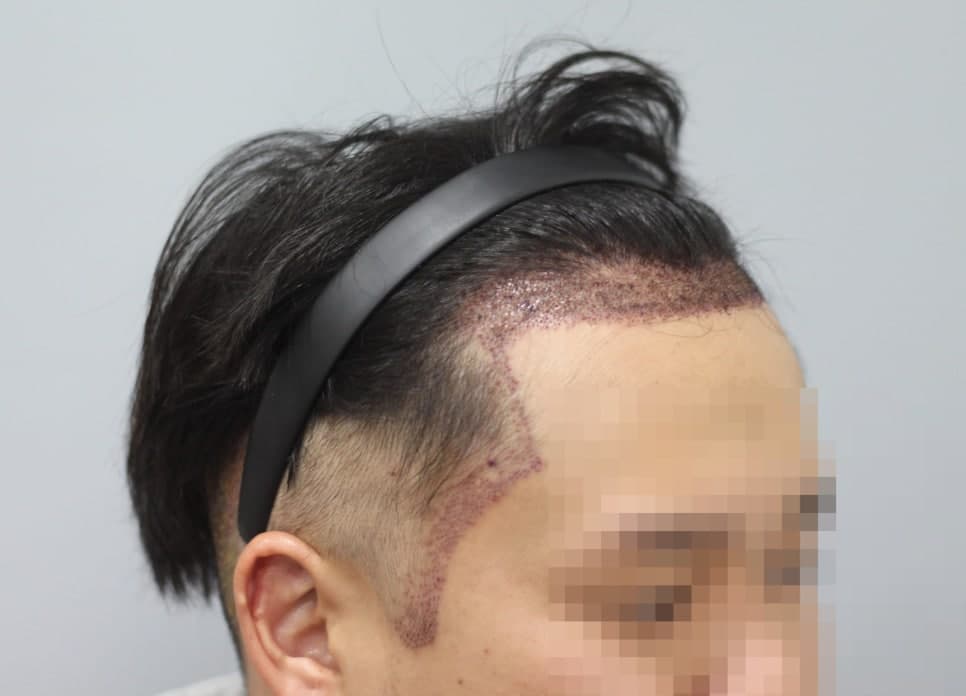
Often it has not. Much of what falls out in the first weeks is typically the hair shafts carried by the transplanted grafts, an expected shedding that is different from losing the grafts themselves. A separate and less predictable kind of shedding can affect the hair that was already there. And a few things that look like shedding are not, which is why knowing what would be unusual matters as much as knowing what is expected.
Two different kinds of falling out
Shedding of the transplanted hairs is the expected kind. The American Academy of Dermatology says the transplanted hair falls out between two and eight weeks after surgery, and that by the third month the area may look thinner than it did before. The NHS describes the same pattern, with new hair usually starting to appear after about four months.
Shock loss is something else: temporary loss of existing, non-transplanted hair around the operated area. It does not happen to everyone. In one published series of 621 people who had FUE, 23 developed this kind of temporary loss at the recipient site, and women were affected more often than men, particularly older women with female pattern hair loss. If your own hair around the area is already thinning, ask your surgeon before surgery how likely shock loss is for you, and whether medical treatment alongside the transplant makes sense.[1][2][3]
When to have it looked at
The NHS says new hair usually starts to appear after about four months, and the AAD says most people see results between six and nine months, some at twelve. Timelines vary, and waiting is reasonable for ordinary shedding. Some things are not part of it, though, and if you are unsure which you are seeing, ask rather than wait. Contact your surgeon, or a local doctor if you are far away, if you notice:[1][2]
- Redness, swelling, warmth or pain that is increasing rather than settling, pus, or a fever.
- Patches of hair loss well outside the operated area, or loss that keeps spreading.
- Very little visible growth by around six months.
- Steady thinning of the hair that was not transplanted, which may be the underlying hair loss carrying on and is worth treating in its own right.
Photos beat memory
None of these signs automatically means the transplant has failed, but each deserves a look instead of more waiting. When you get in touch, have the date of surgery, the method, the number of grafts, and a set of photos taken in the same light from the day of surgery onward. Your own photos, month by month, are far more useful to you and the doctor than anyone else's before-and-after pictures, which show individual results rather than a schedule.